Imagine it’s 2000 and you’re during an epic journey in Final Fantasy X. You’ve conquered bosses, unlocked secrets, and absolutely need to save your progress. Here’s the kicker, without a PlayStation 2 memory card, all that hard work is gone faster than your hopes of finding a good parking spot on Black Friday. Let’s jump into the world of PS2 memory cards, which often don’t get the spotlight they deserve but are essential for gamers who want to preserve their legendary quests and gaming glory. So, buckle up and enjoy this informative yet entertaining ride.
Overview of PlayStation 2 Memory Cards
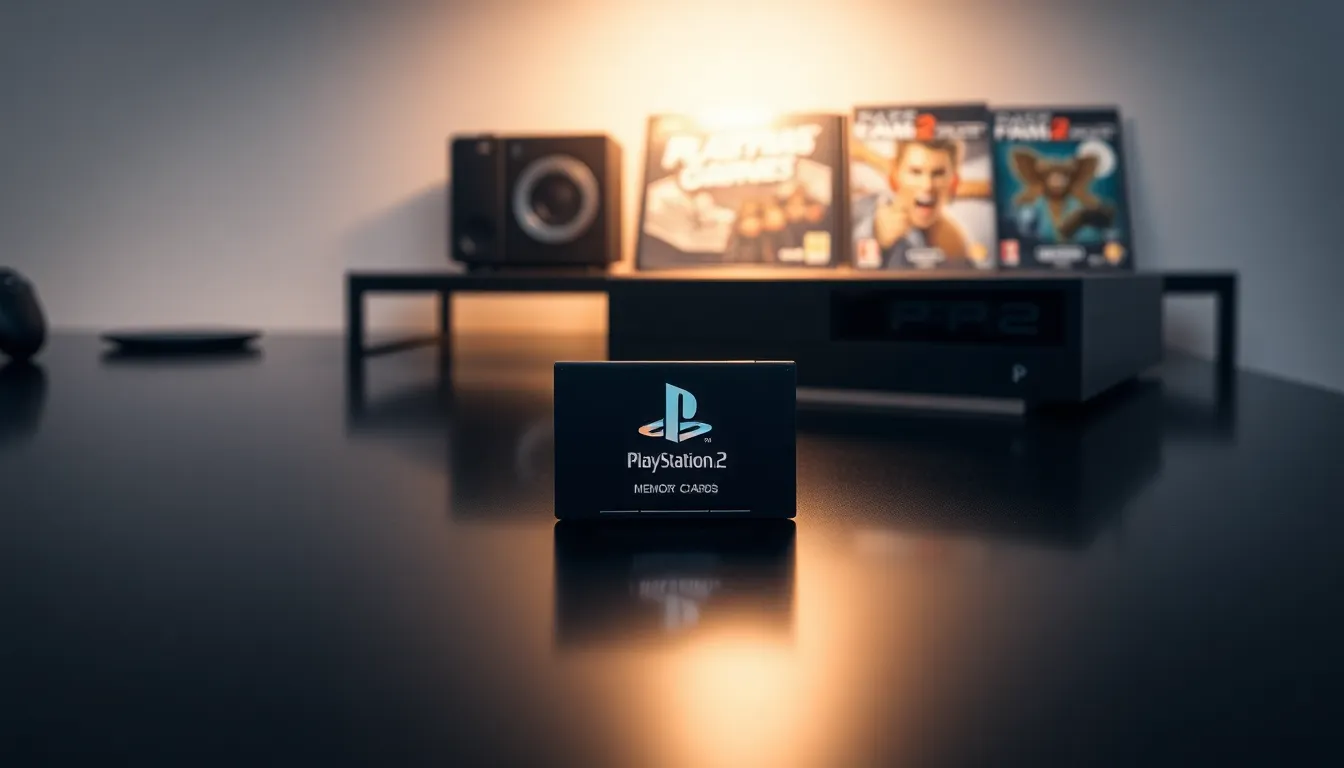
Memory cards for the PlayStation 2 are small, unassuming devices that hold a treasure trove of saved game data. Each card slots neatly into the console, supporting those exhilarating moments that make gaming worthwhile. With a storage capacity of 8 MB, they might seem quaint compared to today’s cloud solutions. But, back in the early 2000s, 8 MB was more than adequate for all those gripping adventures. Some players might even say that those memory cards are like the “little black dress” of the gaming world, never out of style and always essential.
These cards were designed specifically for the PS2, making them distinct from the memory systems used by other consoles like the PlayStation 3 or Xbox. PlayStation 2 memory cards contain the intricate data necessary to bring players back to the exact point where they left off, no loose ends or dreaded restarts.
Plus, these memory cards were not just a means of saving: they often became a means of camaraderie. Players would share memory cards, showing off their hard-earned achievements and unlockables.
Importance of Memory Cards for PS2 Gaming
Memory cards play a vital role in enhancing the gaming experience on the PlayStation 2. Have you ever spent hours grinding in a multiplayer scenario or trying to defeat a difficult boss? The last thing you want is to lose all that effort due to a power outage or a sudden interruption. Memory cards swoop in to save the day.
They not only act as a safety net for your progress but also allow for the storage of multiple game files. In fact, the versatility of a single PlayStation 2 memory card can accommodate numerous games, making it convenient for players who juggle different titles. Also, it provides a way to store cheat codes and unique modifications without needing to start from scratch each time. This freedom adds layers to the gaming experience, creating opportunities for creativity and exploration.
Without a memory card, the PlayStation 2 experience would feel incomplete. It’s almost like enjoying a pizza without the toppings, totally possible but significantly less enjoyable.
Types of PlayStation 2 Memory Cards
When it comes to memory cards for PlayStation 2, variety is the spice of life. There are typically two main types: official Sony memory cards and third-party alternatives.
Official Sony Memory Cards
These are manufactured directly by Sony and ensure optimal performance. Users have consistently noted their reliability and quality. Each card is designed to integrate seamlessly with the console, making them a preferred choice for many gamers. The build quality tends to be quite sturdy, providing peace of mind during those intense gaming sessions.
Third-Party Memory Cards
Third-party manufacturers also jumped on the memory card bandwagon. While some of these cards may offer larger storage, it’s essential to conduct thorough research. Quality varies significantly among third-party options, with some being outright unreliable. Users have reported instances of data loss or incomplete saves, a nightmare scenario for any dedicated gamer.
Plus, there are also options like memory card adapters that allow for greater connectivity. Players now have the chance to blend old technology with new possibilities. With advancements in technology, the concept of using external storage devices has also gained traction, though traditional memory cards still retain their place in gaming culture.
How to Choose the Right Memory Card
Choosing the right memory card involves more than just picking one off the shelf. It’s similar to dating, you want to find the right match. Here’s a quick guide to ensuring you get the most suitable PS2 memory card for your gaming needs.
- Consider Storage Capacity: Determine how many games you intend to play. If you’re a single-game addict, a basic 8MB may suffice. On the other hand, if you love dabbling in multiple titles, consider cards with more storage.
- Check Compatibility: Ensure that the card is compatible with your PS2. While most cards are, checking never hurts. No one wants to be stuck holding a memory card that’s as useful as a chocolate teapot.
- Read Reviews: Jump into user reviews and ratings. Seeing what others have experienced can save you from potential frustration down the line.
- Gauge Reliability: If a card has consistent reports of data loss or performance hiccups, it might be best to steer clear. Opt for cards that showcase durability and reliability.
- Consider Brand Reputation: Go for trusted brands, whether it’s Sony or a reputable third-party manufacturer. Quality often correlates with brand reputation, especially in gaming accessories.
Setting Up Your PlayStation 2 Memory Card
Ready to make all those sweet, sweet saves? Setting up your PlayStation 2 memory card is as easy as pie. Here’s a straightforward guide to help you get started:
- Insert the Memory Card: Find the memory card slot on your PS2 console. Slip the card firmly into the slot until it clicks into place.
- Power On Your Console: Turn on your PlayStation 2 and navigate to the main menu. Make sure it recognizes your memory card, if it doesn’t, double-check that it’s firmly in place.
- Format the Memory Card: The first-time users might need to format the card. This process prepares the card to store data from your gaming sessions. Simply select the option in the system menu, confirm, and let the formatting complete.
- Save Your Game: You’re now ready to save your game. Most games will prompt you to save at convenient moments. It’s as simple as selecting the save option and choosing the memory card.
- Eject and Store Safely: When you are done, make sure to eject the memory card safely. Avoid leaving it exposed to dust or accidental damage.
Common Issues and Troubleshooting
Even the best-laid plans can go awry, and this holds true for PlayStation 2 memory cards. Here’s a list of common issues and effective troubleshooting tips:
Memory Card Not Recognized
If your PS2 isn’t recognizing your memory card, first check if it’s properly seated in the slot. If it still doesn’t work, consider trying out another memory card to see if the console is the problem. Sometimes, a good ol’ reset of the console can do wonders.
Data Loss
Experiencing data loss is nerve-wracking. If this happens, check to ensure the memory card was ejected properly. Improper ejection can lead to corrupted files. In severe cases, there might be no other option than to reformat the card, which leads to losing all saved data. It’s crucial to back up important saves by periodically transferring them to another card.
Slow Read/Write Speeds
Sluggish read or write speeds can pose a nuisance when playing games. Cleaning the contacts of the memory card gently can help. If the problem persists, consider replacing the card. Don’t let slow speeds interrupt your gaming flow.