In a world where drones are no longer just toys for tech enthusiasts, mastering an advanced UAV setup can elevate anyone from hobbyist to high-flying hero. Imagine piloting a drone that not only captures stunning aerial footage but also outsmarts your neighbor’s outdated model. Who wouldn’t want that bragging right?
Overview of Advanced UAV Setup
Advanced UAV setups involve several essential components and configurations that enhance overall performance. Hardware choices and software integrations play a crucial role in achieving optimal results. For instance, high-quality cameras and sensors significantly improve image quality and data accuracy, enabling more effective aerial photography and surveying.
Battery selection impacts flight time and reliability. LiPo batteries, known for their efficiency, provide longer flight durations compared to standard alternatives. Proper battery management systems also ensure safety and longevity during operations.
The flight controller serves as the brain of a UAV, executing commands and stabilizing the craft during flight. Advanced controllers offer customizable settings that adapt to diverse flying conditions and pilot preferences for agile maneuvers.
Communication systems, including radio transmitters and receivers, are vital for real-time data transmission. They allow pilots to maintain direct control over the UAV even at significant distances. Adopting the latest technologies, such as 5G networks, enhances connectivity and reduces lag time.
Incorporating software capable of mission planning is a critical element of advanced UAV setups. These programs facilitate predefined flight paths, automate aerial tasks, and gather crucial data for post-flight analysis.
Maintaining regular updates on firmware ensures optimal performance and access to the newest features. Staying current with regulations is essential for compliance and ensures safe operations within defined airspace.
Ultimately, embracing advanced UAV setups opens new pathways for creativity and innovation, enabling users to achieve unprecedented results and higher satisfaction in their drone activities.
Components of Advanced UAV Setup
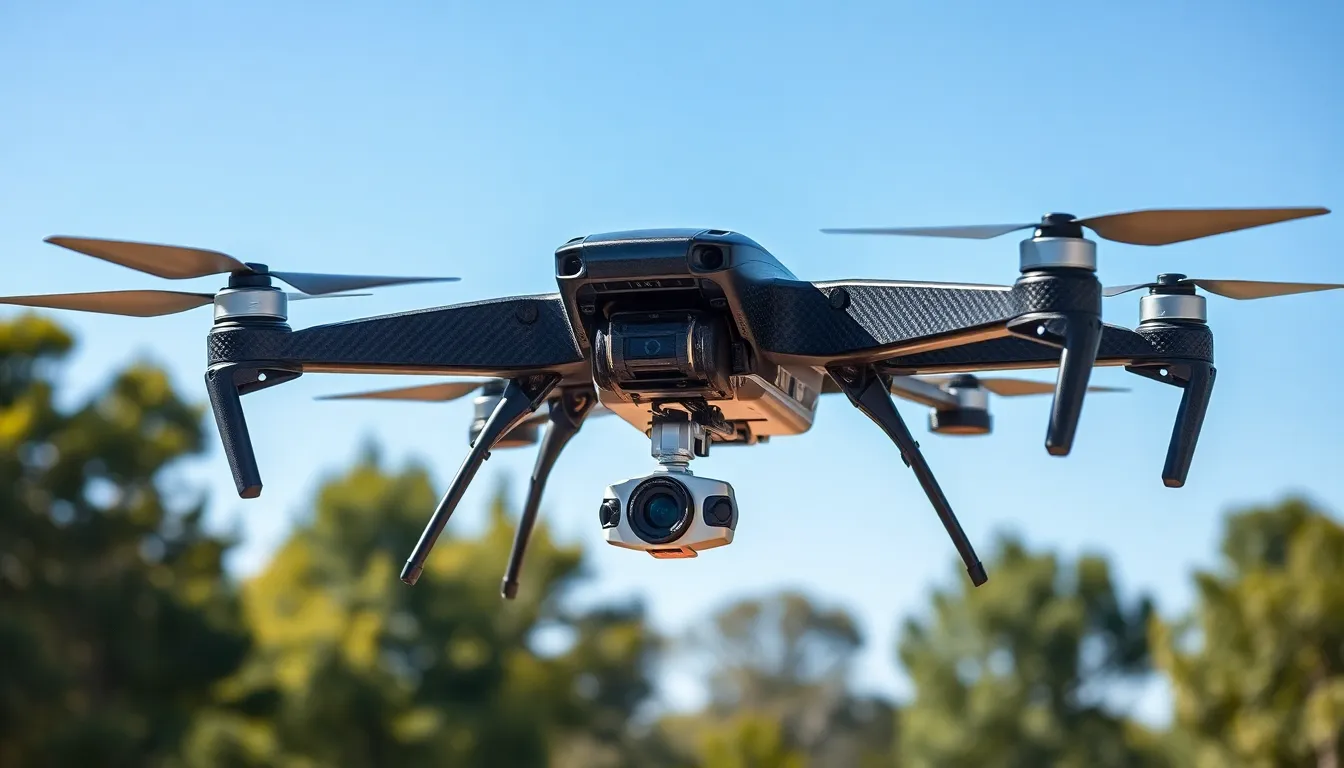
Advanced UAV setups consist of several critical components that significantly influence performance and capabilities. These elements include airframe design, propulsion systems, and sensors as well as payloads.
Airframe Design
Airframe design impacts the UAV’s weight, durability, and aerodynamics. Materials like carbon fiber and lightweight aluminum reduce weight while maintaining strength. Aerodynamic shapes enhance stability and maneuverability in various flight conditions. A well-designed airframe contributes to improved flight efficiency and payload capacity. Features such as foldable arms and compact designs also facilitate portability, making transportation more convenient for users.
Propulsion Systems
Propulsion systems are vital for UAV performance and efficiency. Electric motors commonly power advanced UAVs, providing responsiveness and reduced noise levels. Selecting the right propellers enhances thrust and overall maneuverability. Brushless motors are often favored for their durability and efficiency in various applications. Additionally, integrating advanced ESC (electronic speed control) units allows for precise control of motor speed, ensuring optimal performance during flight operations.
Sensors and Payloads
Sensors and payloads significantly enhance the capabilities of UAVs. High-resolution cameras facilitate stunning aerial photography and videography. LiDAR sensors provide accurate terrain mapping and surveying data. Thermal imaging cameras improve search and rescue operations by detecting heat signatures. Adding GPS modules ensures precise navigation and geotagging. Payload flexibility allows users to customize their UAV for specific missions, increasing its utility across industries.
Software and Control Systems
Advanced UAV setups rely heavily on sophisticated software and control systems. These components directly influence the drone’s operation, enhancing performance and user experience.
Flight Control Software
Flight control software serves as the core operating system for UAVs. This software manages stabilization, navigation, and execution of automated flight paths. Open-source options, like ArduPilot and PX4, offer flexibility for customization. Commercial software provides extensive features, including various flight modes and mission planning capabilities. Integrating GPS and IMU data, flight control software ensures precise maneuvers, even in challenging environments. Regular updates to this software enhance functionality, providing improved stability and increased reliability.
Ground Control Stations
Ground control stations act as vital hubs for UAV operation. These stations enable real-time monitoring, data analysis, and communication between the pilot and the drone. Many stations feature user-friendly interfaces that display telemetry data, such as altitude, speed, and battery status. Command software allows users to set waypoints and automate flight tasks with ease. Furthermore, ground control stations can store and analyze flight data, aiding in post-flight evaluation. These tools play a crucial role in mission planning, contributing to safer and more efficient UAV operations.
Applications of Advanced UAV Setup
Advanced UAV setups have a broad range of practical applications. These enhancements empower users to perform complex tasks efficiently and effectively.
Agriculture and Environmental Monitoring
Advanced UAV setups significantly improve agricultural practices. Drones equipped with multispectral cameras facilitate crop health monitoring, enabling farmers to assess plant vigor and detect diseases early. They capture data on soil moisture levels, guiding irrigation decisions for optimal resource usage. Additionally, real-time mapping aids in land assessment, helping farmers analyze and manage field variability. Environmental monitoring benefits from UAVs as well. It is possible to gather data on wildlife habitats, assess pollution levels, and track changes in ecosystems, contributing to better conservation efforts.
Search and Rescue Operations
In search and rescue operations, advanced UAV setups provide crucial support. Drones equipped with thermal imaging cameras can locate missing persons in challenging terrains. They cover large areas quickly, reducing search time significantly. UAVs also provide live video feeds to rescue teams, enhancing situational awareness. By using automated flight paths, they reach remote locations in emergencies, making rescue operations more efficient. Communication systems allow real-time transmission of critical data, enabling responders to develop effective strategies.
Aerial Photography and Videography
Advanced UAV setups transform aerial photography and videography. High-quality cameras capture stunning visuals from unique perspectives, suitable for both professional filmmakers and enthusiasts. Stability systems minimize vibrations, ensuring sharp images even in windy conditions. Drones equipped with gimbals offer dynamic shot options, enhancing creativity in production. Furthermore, advanced software assists in post-production, allowing seamless stitching of images for breathtaking panoramas. Users can explore new techniques like time-lapse and hyper-lapse, elevating storytelling through imagery.
Challenges in Advanced UAV Setup
Advanced UAV setups present unique challenges that practitioners must navigate for successful operation and application.
Regulatory Considerations
Regulatory compliance plays a critical role in UAV deployment. Various national and local jurisdictions mandate specific regulations regarding flight altitude, no-fly zones, and pilot licensing. FAA regulations in the U.S. require operators to register UAVs weighing over 0.55 pounds and follow guidelines for commercial usage. Violations can result in significant penalties, thus understanding and adhering to these regulations is essential for safe UAV operation.
Technical Limitations
Technical limitations in UAV technology can significantly impact operational efficiency. Battery life constitutes a primary concern, with most commercial UAVs providing 20 to 30 minutes of flight time. Such constraints necessitate effective mission planning to maximize available air time. Additionally, sensor capabilities often dictate performance; for example, low-light scenarios can lead to inadequate data collection. These factors highlight the importance of continuous advancements in both hardware and software to enhance UAV functionality.
Mastering advanced UAV setups is a game changer for both hobbyists and professionals. It not only enhances flight performance but also opens doors to innovative applications across various industries. With the right combination of hardware and software, users can achieve stunning aerial footage and gather critical data efficiently.
Embracing these advanced technologies allows pilots to push the boundaries of what’s possible. While challenges like regulatory compliance and technical limitations exist, they can be navigated with careful planning and continuous learning. Ultimately, investing time and resources into advanced UAV setups leads to greater satisfaction and remarkable outcomes in drone operations.